Before you go
Getting ready for East Africa.
Entry, health, money, packing and the practical shape of a safari day.
01
Entry and visas
Kenya requires an electronic travel authorisation for most visitors, applied for online before arrival. Tanzania requires a visa, applied for online in advance or issued on arrival depending on your nationality.
Cross-border travellers need to check the entry requirements for both countries. Confirm the current visa and payment process for your nationality before departure.
Requirements change. Check your own government's current travel advice as well as the destination country's official guidance before you book flights.
02
Health and vaccinations
This is a question for a travel clinic, not a tour operator. Book an appointment six to eight weeks before you travel so there is time for any course of vaccinations.
Yellow fever certification is required in some circumstances depending on your route and where you have travelled from. Malaria prophylaxis is normally recommended for safari areas in both countries.
Bring any prescription medication in its original packaging with a copy of the prescription, plus a simple first-aid kit. Comprehensive travel and medical insurance is a condition of travel on every trip we run.
03
Money and tipping
US dollars are widely accepted for park fees, tips and extras across both countries. Bring notes issued in 2009 or later — older notes are frequently refused. Kenyan and Tanzanian shillings are useful for small local purchases.
Card payment works in cities and at most lodges, but not reliably at public campsites or small suppliers. ATMs are plentiful in Nairobi and Arusha and scarce in the parks.
Tipping is customary and not included in your safari price. Your driver-guide and the camp staff are normally tipped separately. We give current guideline amounts with your final documents rather than publishing a figure here that will date.
04
What to pack
Less than you think, in neutral colours. Khaki, olive and stone work; bright white shows dust and dark blue and black attract tsetse flies in some woodland areas.
One genuinely warm layer is the item people leave behind and regret. The Ngorongoro rim sits above 2,200 m and open-vehicle drives before dawn are cold anywhere.
Bring binoculars — one pair each, not one to share. Light aircraft transfers cap luggage at around 15 kg in a soft bag, so a hard suitcase is a problem if you are flying between parks.
Single-use plastic bags are banned in both countries and the ban is enforced at the airport. Use packing cubes or dry bags.
05
Power and connectivity
Both countries use UK-style three-pin Type G sockets at 240V. Bring an adapter and a power bank — some camps run generators for limited hours rather than around the clock.
Mobile coverage is good in towns and patchy inside the parks. Most camps and lodges have wifi in public areas and some have it in rooms, but it is not the place to plan on working from.
06
Safety and wildlife
Safari areas in Kenya and Tanzania are well established and well travelled. Normal city precautions apply in Nairobi and Arusha. Check your own government's current advice for the specific regions on your route.
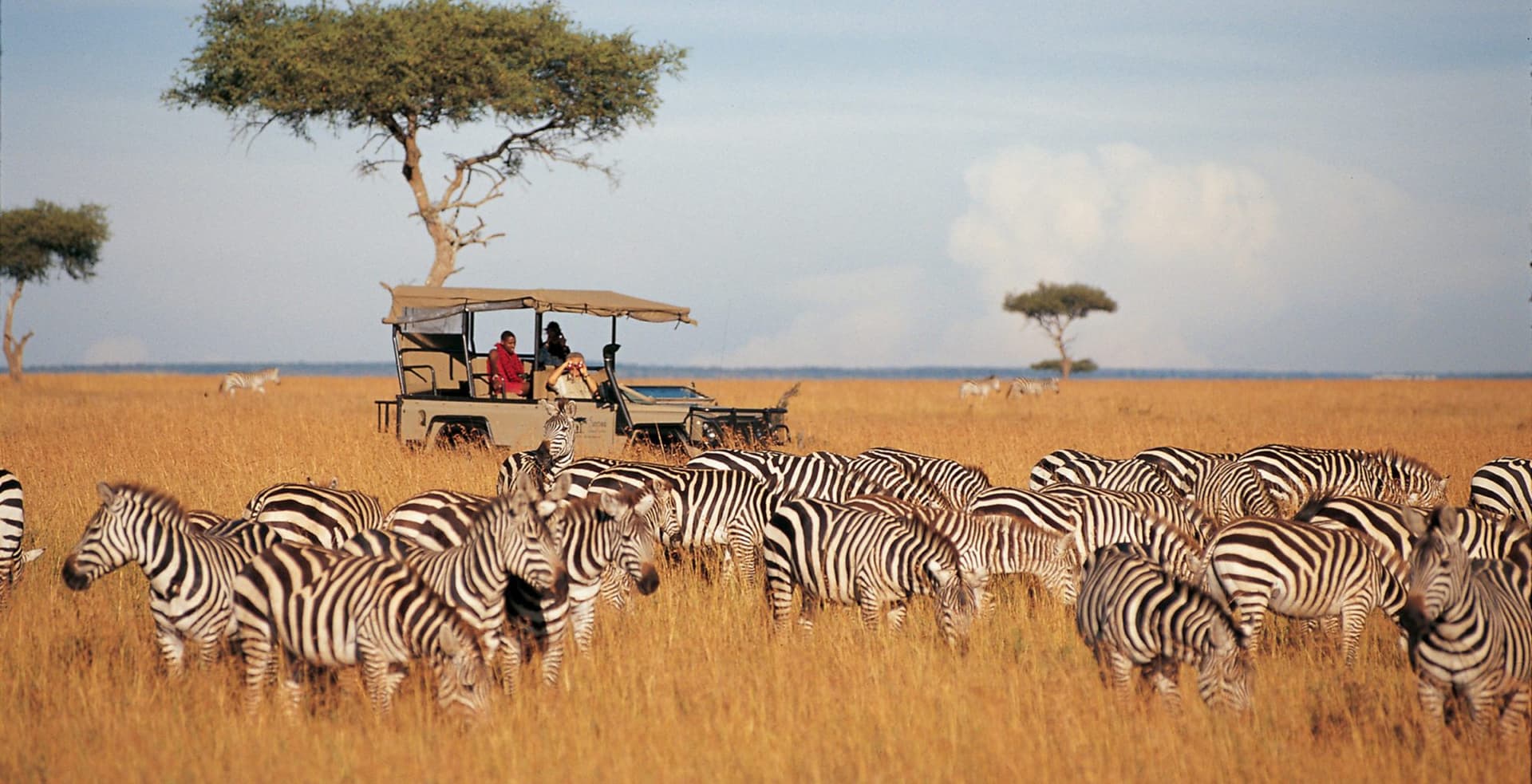
On game drives, stay in the vehicle unless your guide says otherwise, keep your voice down near sightings, and do not stand up or lean out. These are not formalities — they are how the animals stay habituated to vehicles rather than to people.
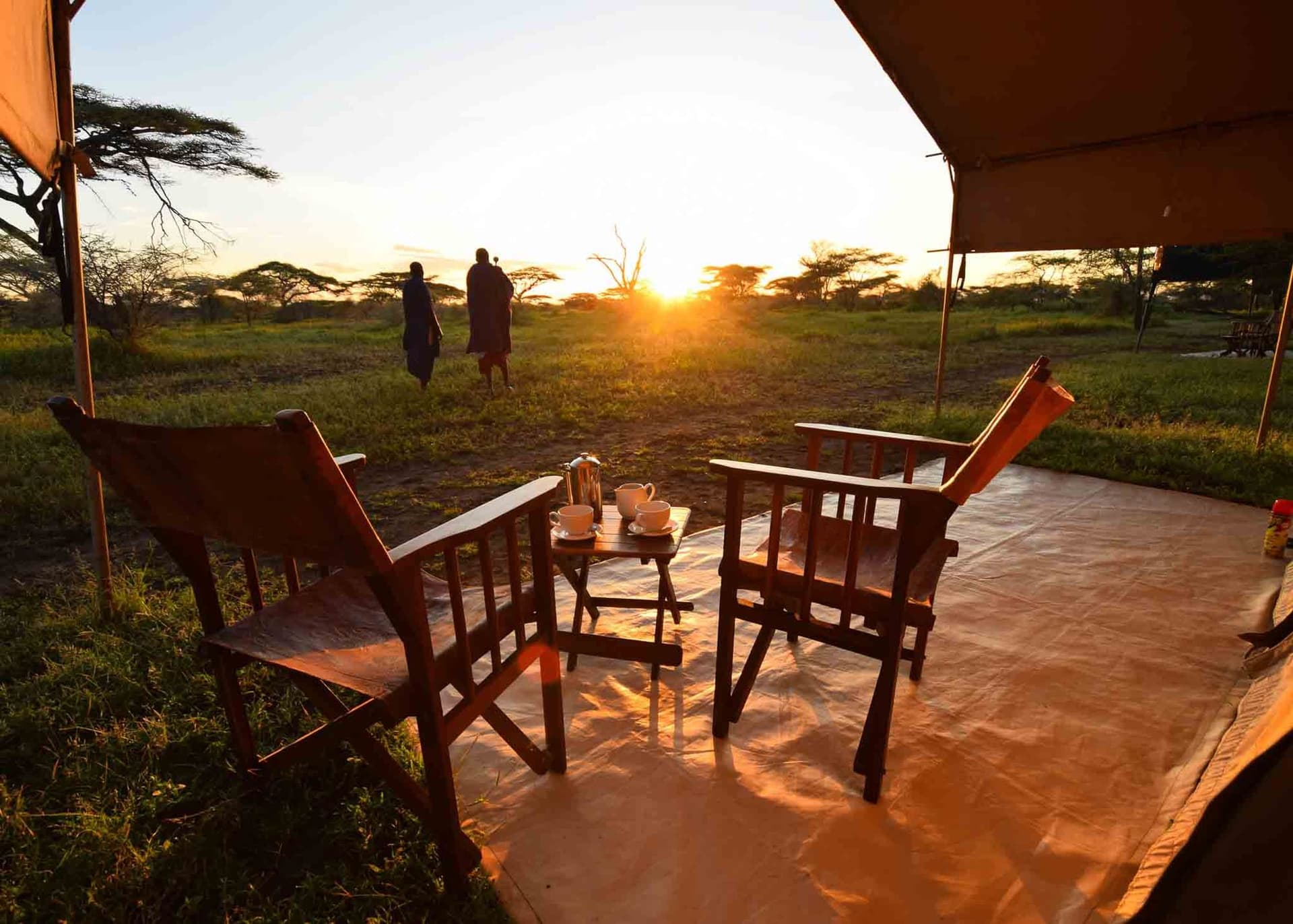
In camp, follow the escort rules after dark. Unfenced camps are unfenced for a reason, and staff will walk you to your tent.
07
What a safari day looks like
A wake-up call around 5.30, out as the gate opens, and back for a proper breakfast mid-morning. The middle of the day is quiet — animals find shade and so do you. Out again around four, back by dusk, because night driving is not permitted in most national parks.
On a full-day drive you stay out with a picnic lunch instead. Which format you get depends on the route and the day, and both are set out on each safari page.
Keep reading
More in the Field Journal.
The journal goes further on individual questions — when to visit the Maasai Mara, how many days you actually need, and what to pack in more detail.
Plan your safari
Let's mark your route.
Tell us your dates and how long you have, and we will come back with a quotation and a suggested itinerary.
A guided enquiry, not an instant booking. No obligation.