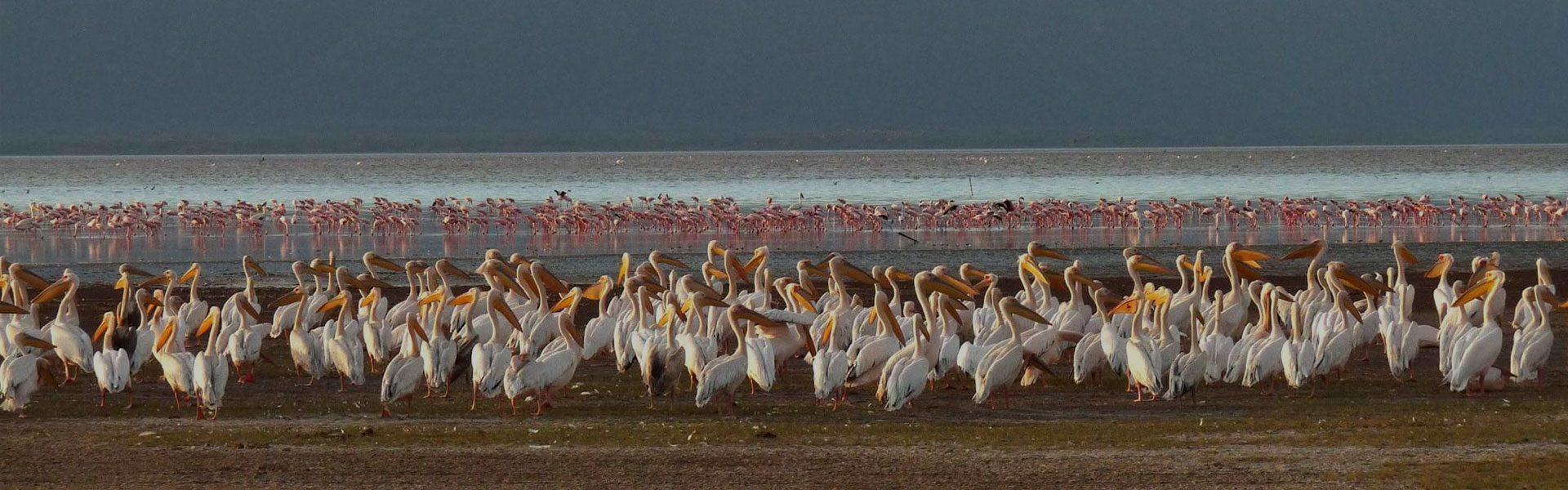
Flamingos and Rift Valley lakes
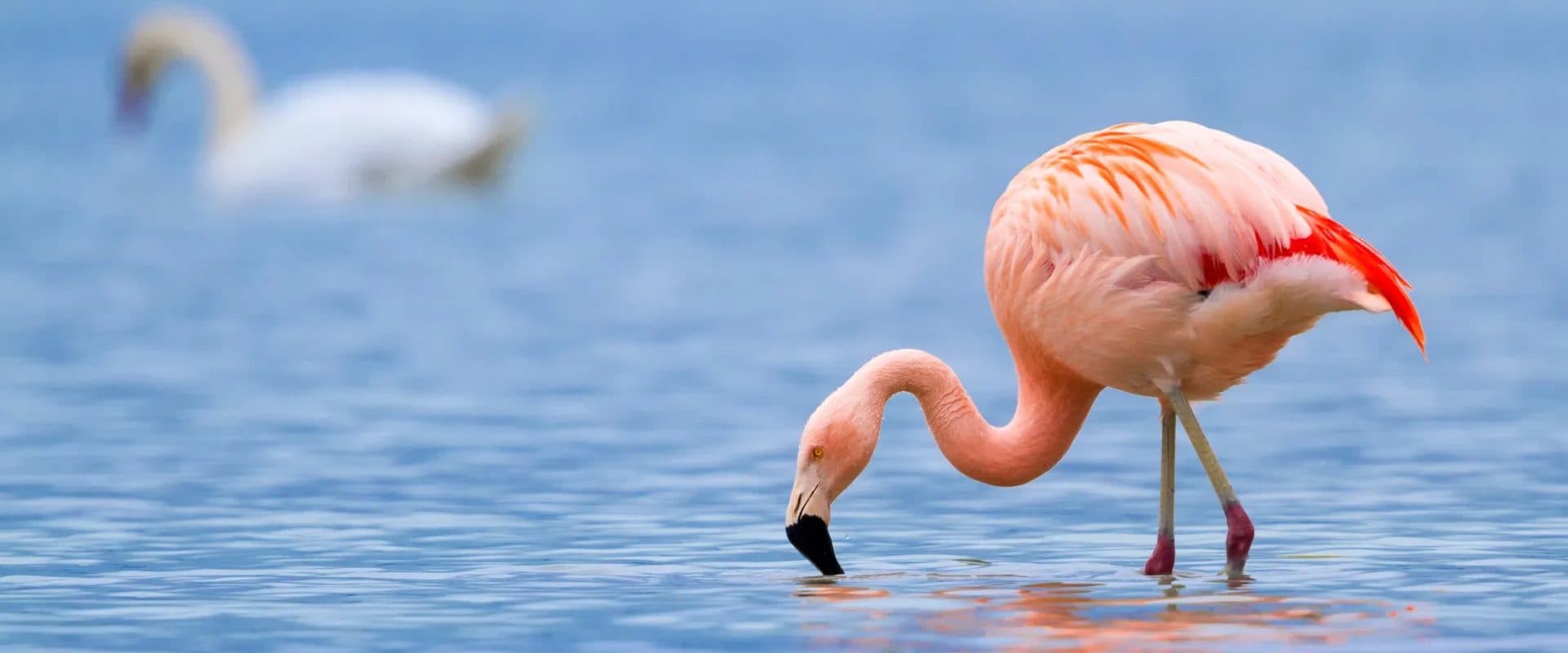
Lake Nakuru and Lake Bogoria are important alkaline-lake habitats, but flamingos move between lakes as water chemistry and food conditions change. Plan for the wetland, not a promised pink shoreline.
Safari style 09
Choose lakes, wetlands, woodland and savannah around the birds that matter to you.
What it means
Kenya's Rift Valley routes can combine alkaline lakes such as Nakuru and Bogoria with freshwater Naivasha and Baringo. Their different habitats create varied birding, but flamingos and other waterbirds move as water level, chemistry and food conditions change.
In Tanzania, Lake Manyara combines groundwater forest, acacia woodland, floodplain, papyrus wetland and alkaline lakeshore; Tarangire adds dry woodland, river and seasonal-swamp habitat.
There is no single best birding month for every destination. Resident birds matter all year, while Palearctic migrants from Europe and Asia are broadly present from September or October into March or April. Rain, breeding and access vary by species, place and year.
Choose habitat before a checklist
Dedicated birders usually need slower observation and more habitat variety. A general safari traveller may simply want the guide to keep birds visible while mammals remain central. Both start by choosing the right route shape.
There is no single best birding month for every East African destination. Birds, flamingo concentrations, rainfall, water levels and road access all vary; no species or flock can be guaranteed.
What do you want to see?
Lake Nakuru and Lake Bogoria are important alkaline-lake habitats, but flamingos move between lakes as water chemistry and food conditions change. Plan for the wetland, not a promised pink shoreline.
Lake Naivasha and Lake Baringo add freshwater, papyrus, shoreline and woodland habitat. Fish eagles, herons, kingfishers and other waterbirds are possibilities, never a checklist guarantee.
Amboseli's swamps and seasonal lake basin contrast with Manyara's alkaline lake, floodplain and papyrus wetlands. Water level and rainfall shape what is using each habitat.
The Maasai Mara and Serengeti can add raptors, scavengers and grassland birds to a mammal-led safari. Birding does not depend on travelling for the Great Migration.
Lake Manyara's groundwater forest and woodland differ sharply from Tarangire's acacia–baobab country, river line and seasonal swamps. Pairing habitats is more useful than chasing one headline species.
Seasonality without a false promise
East Africa's resident birds make every month relevant. The useful question is which habitats your route includes and how much observation time the itinerary allows.
These are birds that breed in Europe or Asia and spend the northern winter in Africa. Arrival and departure are gradual, vary by species and should not be treated as exact dates.
Rain can refresh wetlands and trigger breeding or brighter plumage in some resident species, but timing differs by species and rainfall. Heavy rain can also slow roads or limit shoreline access.
Dry-season travel can pair more predictable road conditions and concentrated mammal viewing with strong resident birding. It is not a lesser birding season everywhere.
Set the pace before the quote
Prioritise repeated stops, wetlands, habitat transitions, identification time and a slower daily rhythm.
Tell us birding is a priority when you enquire so route and guide requirements can be checked before confirmation. A specialist ornithological guide is not assumed or promised.
Choose a mammal-rich route that includes lakes, swamps, grassland or woodland, then ask the guide to give birdlife meaningful attention.
This approach works well when birds, varied habitats and photography matter, but the trip is not built around a target-species list.
Destination comparison
These strengths describe habitats and planning fit. They are not destination scores or sighting guarantees.
Kenya
Kenya
Kenya
Kenya
Tanzania
Tanzania
Tanzania
A route-only lake pairing
Lake Baringo: Lake Baringo is a freshwater Important Bird Area and Ramsar wetland within the current six- and nine-day Kenya routes. Its waterbirds and surrounding dry-country habitats are a reason to slow the route, not a promised species list.
Lake Bogoria: Lake Bogoria is alkaline and internationally important for waterbirds, but current monitoring shows that flamingo numbers can change sharply as water level, salinity and food conditions shift across the Rift Valley lake network.
View the existing lakes routeRoutes worth considering if birdlife matters
These routes keep their published itineraries, prices and verified travel types. No separate birding package has been invented.
Short Tanzania circuit
Manyara forest and lakeshore, the Ngorongoro highlands and crater, then Tarangire woodland and river habitat.
Six-day Kenya lakes
Combines Mara grassland with Nakuru, Naivasha, Baringo and Bogoria across alkaline and freshwater habitats.
Longer Kenya habitat circuit
Adds Samburu dry country and Amboseli wetlands to the Rift Valley lakes and Maasai Mara grasslands.
Responsible birding
Ndurumo does not promise binoculars, spotting scopes, bird books, recording equipment or a specialist ornithological guide.
Birding mainly for photographs? Use the photography plannerMake birding visible in the enquiry
Tell us your dates, available days, whether birds or mammals lead the trip, and the habitats that matter. We will check the route and guide requirements before confirmation.
Is this you?
Plan your safari
Tell us your dates, available days, whether birds or mammals lead the trip and the habitats that matter. We will check the route and guide requirements before confirmation.
A guided enquiry, not an instant booking. No obligation.